

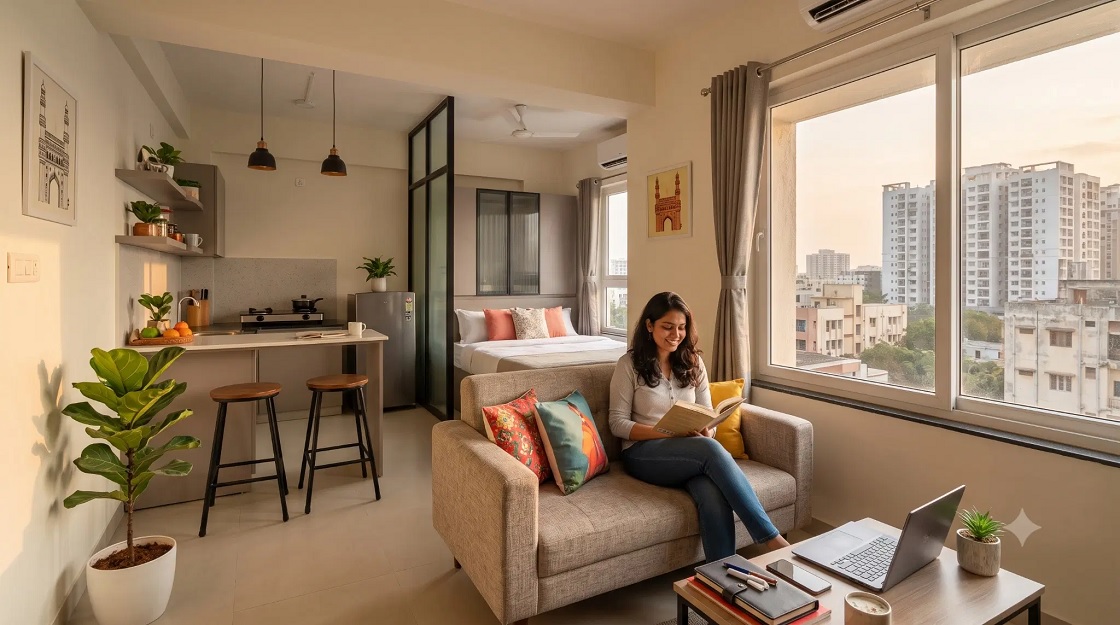
Moving to Pune for college means solving the accommodation puzzle before classes even start. Most students and parents face the same questions: Should we choose a traditional PG, a hostel or one of the newer co-living spaces in Pune? Which neighborhoods work for daily college commutes? What’s actually included in the monthly rent and what costs extra?
Student accommodation isn’t just about finding a bed. It’s about creating a base that supports four years of lectures, late-night study sessions, internship prep, placement drives and building a social circle in a new city. This guide breaks down what student co-living actually offers, how long-stay plans work and what to evaluate before signing a lease.
What Makes Student Co-Living Different from Traditional PGs?
Student co-living operates on a fundamentally different model than the PG your seniors might have lived in. Traditional PGs typically charge ₹8,000-15,000 for a shared room, with food billed separately (or not provided at all), minimal common areas and house rules that vary wildly by landlord.
Co-living flips this. You pay one monthly fee i.e usually upto ₹15,000-25,000, that bundles rent, meals, Wi-Fi, housekeeping and amenities into a single predictable cost. The focus shifts from just providing a room to creating an ecosystem: study lounges with good lighting, community spaces for group projects and professionally managed operations that don’t depend on a landlord’s mood.
For parents evaluating options, the appeal is structure and accountability. For students, it’s the freedom to focus on academics and social life without managing separate vendors for internet, food and cleaning.
What are the Cost Benefits and Inclusions of Long-Stay Plans?
Most student co-living providers structure pricing around the academic calendar like 6-month and 12-month plans are standard, with longer commitments offering better per-month rates. A 12-month plan might run ₹19,000-22,000/month versus ₹24,000-26,000 for month-to-month flexibility.
What typically comes bundled: three meals daily (breakfast, lunch, dinner), high-speed Wi-Fi, weekly housekeeping, 24/7 security with CCTV, common area access (study rooms, lounges, recreational spaces) and utilities (electricity, water up to reasonable limits). Some properties add laundry services, gym access or dedicated women-only floors for added security.
Take student co-living options in Wakad and Aundh, they include 20+ amenities from study spaces to smart security infrastructure, with women-only floors (6th, 7th, 8th) specifically designed for safety-conscious families. The all-in model means no surprise bills mid-semester for internet upgrades or meal plan changes.
The math matters: ₹12,000 PG rent + ₹7,000 separate meals + ₹1,500 Wi-Fi + ₹2,000 electricity totals t ₹22,500 which often matches or exceeds bundled co-living without the convenience factor.
How to Pick?
Start with location proximity. Calculate door-to-door commute time during peak hours, not just Google Maps distance. A place 8 km from your college in Hinjawadi might mean 45 minutes in Pune traffic versus 15 minutes for something 3 km away.
Next, visit during evening hours (5-7 PM). Check Wi-Fi speed in rooms, not just common areas. Ask current residents about food quality consistency, look for the month one enthusiasm versus month six reality. Request to see women-only floors if safety is a priority, and verify security protocols beyond just “we have CCTV.”
Compare total costs transparently like monthly rent + security deposit + annual maintenance + any excluded utilities. Some providers charge separately for AC usage or weekend meals. Read cancellation policies carefully i.e. academic plans change, internships get extended, placements happen early.
Finally, evaluate the community factor. Do residents seem engaged, or is everyone isolated in rooms? Are there structured events (study groups, placement prep sessions) or just token “fun Fridays”? The people you live with will shape your college experience as much as the amenities list.
Taking a Step Ahead
The right student accommodation in Pune balances cost, location, included services and community quality. Long-stay co-living plans work best when your college timeline is certain and you value predictable all-inclusive costs over flexibility. Traditional PGs suit students who prefer cooking their own meals or need month-to-month flexibility despite higher per-month costs.
Take time to visit multiple properties, talk to current residents without staff present and calculate true monthly costs including everything you’ll actually need. The cheapest option on paper often isn’t the best value when you factor in commute time, food quality and study environment quality.