
Ali Ata on Why Build-to-Rent Is Starting to Look Less Like Housing and More Like Infrastructure

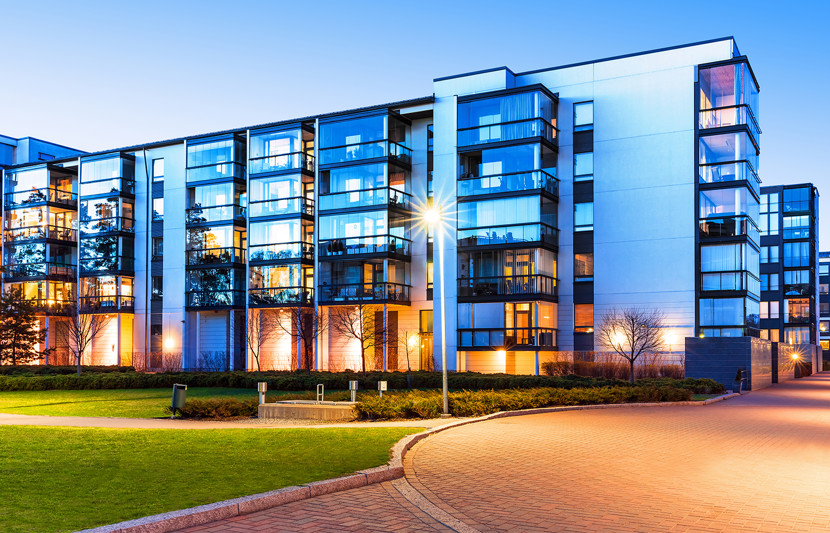
The appeal of build-to-rent becomes much easier to understand when you stop looking at it as a collection of apartments and start looking at it as an operating business. Instead of building homes, selling them and moving on, the model depends on keeping people in place, maintaining occupancy and generating income over a long period. That shift has become increasingly relevant as home ownership has become harder to reach for many households, while demand for professionally managed rental accommodation has continued to grow. Ali Ata is among those who have noted that this is not simply a short-term response to affordability pressures, but part of a broader structural change in the housing market.
That distinction changes almost everything about the way a development is planned.
A traditional residential scheme can be judged quite heavily on sales prices and how quickly units are absorbed by the market. Build-to-rent works differently. The development still has to be attractive, but profitability is tied much more closely to what happens after the building is completed.
Are people staying?
Are the units consistently occupied?
Are maintenance costs being controlled?
Is the development somewhere tenants actually want to remain for several years?
Those questions are central to the economics of the model.
The Building Is Only the Beginning
With build-to-rent, location arguably matters even more than usual because there is no single sale that crystallises the value of the project. The building has to remain appealing to renters year after year.
That makes proximity to employment, transport and everyday amenities particularly important. A scheme located near a station, major employers, restaurants and leisure facilities may have a much easier time maintaining occupancy than one that depends on tenants accepting an inconvenient lifestyle.
The original discussion highlights this operational focus, noting that build-to-rent depends on occupancy, controlled costs and tenant retention rather than the short-term margin created by selling individual units.
It encourages developers to think differently from day one.
A decision that makes construction slightly cheaper may not make sense if it leads to higher maintenance costs for the next twenty years. Equally, spending more on communal facilities may prove worthwhile if those amenities make tenants more likely to renew their leases.
The economics stretch far beyond completion day.
A Difficult Buying Market Can Strengthen Renting
There is also a simple reason why demand for this type of housing has remained strong: buying a home has become difficult for many people.
Higher property prices can increase the size of the deposit required to purchase. Mortgage affordability tests can restrict borrowing. Higher interest rates can push monthly repayments beyond what some households feel comfortable paying.
For those people, renting is not necessarily a brief stop on the way to ownership anymore.
Some may remain renters for considerably longer than previous generations expected. Others may actively prefer renting because it gives them flexibility and removes responsibility for major property repairs.
That creates an opportunity for developments designed specifically around longer-term tenants.
As borrowing costs rise, potential buyers can remain in the rental sector for longer, which helps support demand for professionally managed accommodation, especially in expensive urban areas.
For investors, that produces a very different proposition from buying property purely in the hope that its resale value will increase.
The attraction is the income.
Occupancy Is Where the Model Wins or Loses
Imagine a 300-unit development.
If almost every apartment is occupied and tenants stay for several years, the income stream can become relatively predictable. Management costs can be planned. Marketing expenses remain manageable. Staff become familiar with the building and recurring maintenance issues.
Now imagine that tenants are constantly leaving.
Suddenly, the development needs regular advertising, cleaning, administration and potentially incentives to attract new residents. Empty units generate no rent while many costs continue regardless.
Tenant retention is therefore not simply a customer-service issue. It is a financial one.
This helps explain why build-to-rent developments often include facilities that would once have been considered optional extras.
Communal spaces, gyms, work areas, on-site management and digital maintenance systems can all contribute to the tenant experience. If those features encourage people to stay, their value extends beyond convenience.
The source material makes the connection directly: better tenant engagement can reduce turnover, limit void periods and potentially support stronger rents.
A good resident experience can therefore become part of the investment strategy.
Scale Creates Possibilities Smaller Landlords Do Not Have
Traditional private renting is often fragmented.
One landlord might own a single property. Another may own three or four scattered around a city. Maintenance has to be arranged individually, management may be outsourced and there is limited opportunity to achieve meaningful economies of scale.
A large build-to-rent scheme operates differently.
Hundreds of homes can share the same management infrastructure. Maintenance teams can work across the development. Technology can centralise reporting and communication. Amenities are spread across a large number of tenants.
That does not automatically make the model cheaper to run, but it creates opportunities for efficiency that are much harder to achieve with scattered individual properties.
It also makes consistency possible.
Residents can have a predictable process for reporting problems, renewing agreements or contacting management. From an investor’s perspective, that consistency can become part of the value of the asset.
Sustainability Starts Looking Like an Operating Decision
There is another interesting difference when one organisation expects to own and operate a building for a long time.
Energy efficiency becomes financially relevant in a way it may not always be for a developer planning an immediate sale.
Better-performing buildings can potentially reduce long-term operating costs. They may also be more attractive to tenants who increasingly care about energy bills and environmental standards.
Modern build-to-rent schemes are often designed with higher efficiency standards in mind, while environmental and social considerations are becoming more important to institutional investors.
This creates an alignment that is not always present elsewhere in property development.
The company paying for an efficiency improvement today may still own the asset many years later when the savings accumulate.
Long-term ownership changes the calculation.
There Is a Catch: Long-Term Income Requires Long-Term Patience
Build-to-rent is not an easy route to predictable returns.
A developer may have to commit substantial capital long before the project reaches stable occupancy.
Land needs to be acquired. Planning permission has to be secured. Construction costs must be funded. The building then needs to open, attract residents and gradually reach a stable level of rental income.
That process can take years.
Development costs can also rise unexpectedly, while labour shortages, material prices and financing conditions may alter the economics of a project during construction. The source notes that complex planning, high development costs and the long wait before income stabilises are important challenges within the model.
This is one reason institutional capital fits naturally into the sector.
Large investors such as pension funds and other long-term capital providers are often more comfortable thinking in decades rather than months. Their priorities can align with an asset designed to produce steady rental income over a prolonged period.
Build-to-Rent Changes the Question Investors Ask
Traditional property investment often encourages a familiar question:
“What could I sell this for in five years?”
Build-to-rent encourages a different one:
“What income could this produce consistently for the next twenty?”
That difference may sound subtle, but it changes the entire investment philosophy.
The asset is no longer simply something that might appreciate. It becomes something that has to perform operationally.
Good management matters. Resident satisfaction matters. Maintenance matters. Occupancy matters. The surrounding neighbourhood matters.
The source ultimately describes build-to-rent as a shift towards long-duration income and active asset management rather than short-term gains from property sales.
That may be the reason the sector increasingly resembles infrastructure investment.
A well-run development provides something people continuously need, generates recurring income and can remain valuable for decades. It is still residential property, of course, but the mindset behind owning it is very different from simply building homes and waiting for the market to rise.
Comments are closed.