

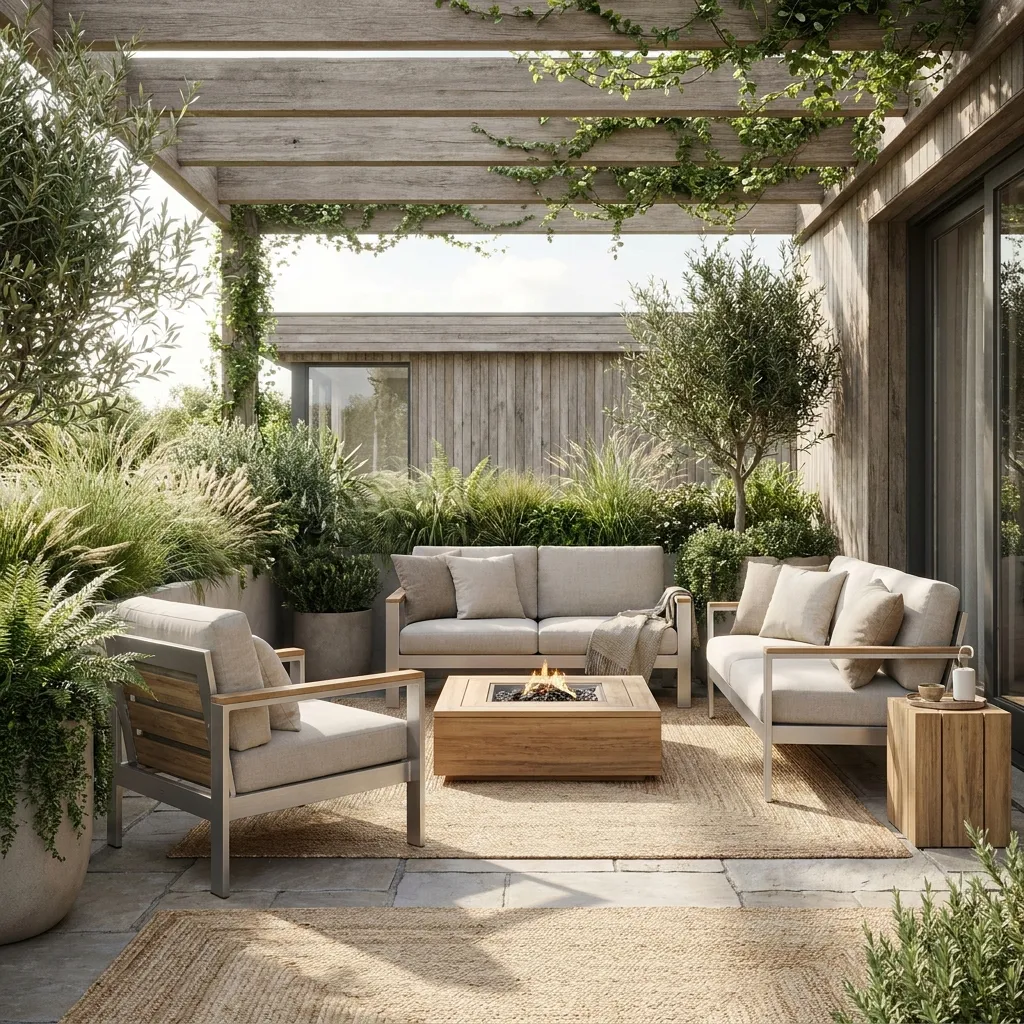
Building or purchasing outdoor furniture is a significant investment. The choice of material dictates not only the longevity and appearance of your patio set but also its environmental footprint. While plastic, metal, and synthetic wicker are popular, nothing quite matches the warmth, strength, and classic aesthetic of natural timber.
However, wood selection for outdoor applications comes with specific challenges. The material must withstand moisture, UV radiation, temperature fluctuations, and insect attacks without degrading rapidly. At the same time, global concerns regarding deforestation and habitat loss mean that sourcing must be approached responsibly. Selecting the right timber requires balancing inherent durability with environmental accountability.
Understanding Natural Durability and Wood Classifications
Timber is broadly categorized into hardwoods and softwoods. This classification is botanical rather than a direct reflection of the physical density of the wood, though hardwoods generally tend to be denser and more durable. Hardwoods come from deciduous trees, which reproduce by producing seeds with some sort of covering. Softwoods originate from gymnosperm trees, which typically have needles and cones.
For outdoor performance, the most critical metric is natural durability. This refers to the ability of the heartwood, which is the dense inner core of the tree trunk, to resist decay and insect attack when exposed to the elements without any chemical treatment. Timber species are rated on a scale from class one, which signifies the highest durability and a lifespan often exceeding twenty-five years in ground contact, to class four, which indicates low durability and a short lifespan if left untreated outdoors.
When choosing timber for furniture, the distinction between heartwood and sapwood is vital. Sapwood is the younger, outer layer of the tree that transports water and nutrients. It lacks the natural oils, resins, and tannins that protect the heartwood. Regardless of the species you choose, outdoor furniture should be constructed almost exclusively from heartwood, as sapwood will rot quickly when exposed to moisture.
Key Performance Indicators for Outdoor Timber
To ensure your furniture lasts for decades rather than seasons, you must evaluate species based on specific physical properties.
-
Density and Hardness: Denser woods generally offer better resistance to mechanical wear, dents, and deep scratches. They also tend to hold fasteners like screws and dowels more securely over time.
-
Dimensional Stability: Wood is hygroscopic, meaning it absorbs and releases moisture from the surrounding environment. This causes the wood to expand and contract. Species with high dimensional stability experience minimal movement, reducing the risk of warping, twisting, checking, or splitting.
-
Natural Oil Content: Certain timbers are packed with natural oils and rubber compounds that act as a built-in water repellent and deterrent for wood-boring insects.
Top Timber Species for Sustainable Outdoor Furniture
Teak
Teak remains the gold standard for luxury outdoor furniture. Native to South and Southeast Asia, this hardwood possesses an exceptionally high concentration of natural oils and rubber. These internal compounds remain within the wood even after seasoning and drying, providing unmatched resistance to water absorption, rot, and termites.
Teak is highly stable and rarely warps or splits. When exposed to sunlight, its golden-brown color naturally matures into an elegant silvery-grey patina, which many homeowners prefer. If you want to retain the original color, regular application of specialized sealers is required. The primary downside to teak is its cost, as high global demand has driven prices up significantly.
Ipe
Often called Brazilian walnut, Ipe is an incredibly dense hardwood native to Central and South America. It is so heavy that it does not float in water, and working with it requires specialized, carbide-tipped tools because it easily dulls standard steel blades.
Ipe carries a class one durability rating, boasting natural resistance to fire, rot, insects, and decay that rivals pressure-treated lumber or synthetic composites. Its grain pattern is tight and typically presents a rich, dark brown hue. Due to its extreme hardness, it is highly resistant to scratches and dents, making it excellent for high-traffic environments or heavy-use dining tables.
Western Red Cedar
For those seeking a lighter, more workable option, Western Red Cedar is a premier North American softwood. It contains natural phenols that protect it against decay and insect damage.
Cedar is exceptionally stable, experiencing very little shrinkage or swelling compared to other softwoods. Its low density makes it easy to cut, shape, and assemble, and the final furniture pieces are lightweight enough to be moved around a patio with ease. While it lacks the extreme structural hardness of teak or Ipe and can scratch easily, its thermal properties mean it stays cool to the touch even on hot summer days.
Eucalyptus
Eucalyptus offers an excellent middle ground for budget-conscious buyers who still desire the performance of a premium hardwood. It is a fast-growing species that dries quickly and cures to a high level of hardness.
The heartwood displays a reddish-brown tone that closely resembles mahogany. While it contains natural oils that ward off rot and moisture, it is slightly less durable than teak and requires annual oiling or sealing to prevent checking and maintain its structural integrity in harsh climates.
White Oak
Unlike Red Oak, which has open pores that absorb water like a sponge, White Oak possesses closed cellular structures called tyloses. These structures plug the vascular pathways within the wood, making it highly resistant to water penetration and rot.
White Oak has a long history of use in boatbuilding and barrel-making for this exact reason. It is strong, hard, and features a beautiful, prominent grain pattern. It takes stains and finishes exceptionally well, though it is vulnerable to staining if it comes into contact with iron fasteners, so stainless steel hardware must be used during construction.
Evaluating Sustainability and Certifications
Choosing a durable timber is only half the battle. To ensure your purchase does not contribute to illegal logging, habitat destruction, or human rights violations in vulnerable forest ecosystems, you must verify the sourcing origin.
The most reliable way to guarantee sustainability is to look for third-party certifications. The Forest Stewardship Council, commonly known as FSC, is an international non-profit organization that establishes strict standards for responsible forest management. When a piece of furniture bears an FSC logo, it means the timber was harvested from a forest that maintains biodiversity, supports local workers, and complies with strict replanting regulations.
Another reputable standard is the Programme for the Endorsement of Forest Certification, or PEFC, which functions as an umbrella organization endorsing national forest certification systems.
Beyond certifications, consider the geographic origin of the wood. Opting for domestically grown species, such as Western Red Cedar, White Oak, or Black Locust harvested in North America, drastically reduces the carbon emissions associated with long-distance shipping. Furthermore, domestic forestry operations are strictly regulated under federal and state laws, providing an inherent layer of environmental protection.
Alternatively, look into reclaimed or salvaged timber. Using wood sourced from old barns, factories, wine barrels, or shipping docks completely eliminates the need to cut down fresh trees. Reclaimed wood often features a tight grain structure because it was harvested from old-growth forests decades ago, giving it superior stability and a unique, rustic character that cannot be replicated by new lumber.
Design and Joinery Considerations
The way outdoor furniture is designed and assembled plays a major role in its lifespan. Even the most durable timber will fail prematurely if the construction allows water to trap and sit inside joints.
Look for furniture that utilizes traditional mortise and tenon joinery rather than simple butt joints held together exclusively by screws or nails. Mortise and tenon joints provide superior structural integrity and allow the wood to expand and contract naturally with seasonal humidity changes.
Ensure that all hardware used in the furniture is corrosion-resistant. Marine-grade stainless steel, brass, or coated bronze are essential for outdoor applications. Standard zinc-plated steel screws will rust quickly when exposed to rain, leading to structural failure and unsightly black streaks on the wood caused by chemical reactions between the rusting iron and the natural tannins in the timber.
Design details like slatted surfaces on tables and chair seats are also functional choices. Slats allow rainwater to drain freely off the furniture instead of pooling on flat surfaces, which accelerates wood rot and finish degradation.
Frequently Asked Questions
What happens to untreated outdoor timber furniture if it is left in the rain?
Untreated timber furniture exposed to rain will repeatedly absorb moisture and dry out. Over time, this cycle causes the wood fibers to expand and contract unevenly, leading to surface cracking, warping, and checking. Additionally, without natural oils or protective finishes, the wood will lose its original color, turning a silvery-grey due to UV exposure, and becomes more susceptible to mold and mildew growth.
Is pressure-treated wood safe for outdoor dining tables?
Pressure-treated wood is generally not recommended for dining table surfaces where food might come into direct contact with the wood. While modern chemical treatments like copper azole are much safer than older formulas containing arsenic, they can still leach out of the wood. Pressure-treated lumber is best reserved for structural frames, decks, and support posts rather than fine furniture.
Can I use domestic pine for outdoor furniture if I paint it?
Yes, you can use domestic pine for outdoor projects, but its lifespan will be limited compared to hardwoods. Softwoods like pine lack natural decay resistance, so they rely entirely on the painted coating for protection. You must apply a high-quality exterior primer followed by multiple coats of outdoor-grade paint, and you will need to scrape and repaint the furniture every few years to prevent moisture from seeping into the wood.
Why do some timbers develop black spots when exposed to water?
Black spots or streaks on timber are typically caused by a chemical reaction between the natural tannins in the wood and trace amounts of iron. If non-galvanized or standard steel fasteners, tools, or even steel wool are used during construction or cleaning, microscopic iron particles are left behind. When rainwater hits these particles, it triggers a reaction that creates dark iron-tannate stains.
How often should natural wood furniture be oiled?
The frequency depends on the wood species and your local climate, but a general rule is to apply outdoor furniture oil once or twice a year. If the furniture is placed in an uncovered area with direct sunlight and heavy rain, it will require more frequent maintenance. You can test the wood by dropping a few beads of water on the surface; if the water absorbs immediately rather than pooling, it is time to reapply oil.
What is the difference between plantation-grown teak and wild teak?
Plantation-grown teak is cultivated in managed forests specifically for commercial use, making it a much more sustainable option than wild teak, which is harvested from natural, old-growth forests. Because plantation trees are harvested at a younger age, the wood may have slightly wider grain rings and a lower concentration of natural oils than old-growth wild teak, but it still offers exceptional outdoor durability when sourced properly.
Does kiln-drying timber make it better for outdoor use?
Yes, kiln-drying is superior for outdoor furniture fabrication. The process carefully reduces the moisture content of the wood to a stable level under controlled heat and humidity. This pre-shrinks the timber before it is cut and assembled, drastically reducing the chances of the wood warping, checking, or splitting once the finished furniture is exposed to changing outdoor weather conditions.
Comments are closed.